Thursday, October 3, 2013

Film Industry Heroes: You're Doin' It Wrong


America loves heroes. I mean, it's in human nature to love a hero because, as Neil Gaiman put it, they "don't show us dragons exist, they show us dragons can be beaten."

In other words, heroes are proof that we can overcome the hardships life throws our way. Their stories show us we are more than our littleness and weakness. We can be strong.

But America is especially obsessed with them. Half the movies coming out nowadays are superhero blockbusters or remakes of favorite heroes of old.

However, I’ve been noticing a growing trend in the way modern heroes are portrayed. 


There's a line from this summer's "The Lone Ranger" that, I think, sums it up: "There comes a time, Kimosabe, when good man must wear mask."

Reminiscent of the story of Robin Hood, the hero of the film, The Lone Ranger, is forced to become a bandit because men, who were supposed to be good, such as sheriffs, were evil. 

Good had to be disguised because the society he lived in no longer recognized good.

The fact that movies like this one are being produced speaks volumes about our culture.

See, our culture has a fascination with anti-heroes, or villians. In disastrous events like Sandy Hook, Aurora Colorado or the Boston Marathon Bombings, our focus is on the killers and why they would commit something so horrible. We hardly glance at the victims, or the emergency response teams that show up to save the day. We're more fascinated by what lunatic is on the loose now. 
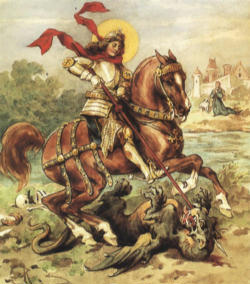

G.K. Chesterton said, "The old fairy tale makes the hero a normal human boy; it is his adventures that are startling; they startle him because he is normal. But in the modern psychological novel the hero is abnormal; the center is not central. Hence the fiercest adventures fail to affect him adequately, and the book is monotonous. You can make a story out of a hero among dragons; but not out of a dragon among dragons. The fairy tale discusses what a sane man will do in a mad world. The sober realistic novel of today discusses what an essential lunatic will do in a dull world.”

Chesterton's onto something. My whole life, I've wondered why, generally, the stories produced during my lifetime were so forgettable; sure, they were fun initially, but that was it. And on the other hand, old stories like The Lord of the Rings or The Chronicles of Narnia, or older stories of King Arthur and Robin Hood, were so memorable. 

It's because now, as a culture, our focus has shifted to the villain; we don't glorify virtue anymore. What was once taboo is celebrated and traditional virtue is mocked and called “outdated”. We went from portraying the normal, every day hero beating the dragons. Now, we focus on the dragon among dragons. 

“The Lone Ranger” was a dud because the hero wasn't actually a hero. (Also the plot was boring.) He didn't sacrifice himself in any way, he didn’t have any "save the day" moments or stunts. He was almost a sidekick to Johnny Depp's anti-hero, Tonto. Tonto wasn't a hero at all, he was incredibly selfish, but he was still the focus of the film.

Even in many superhero movies, there is a growing trend in the "hero" being the guy that's really messed up. Take Robert Downey Jr.'s Ironman, for example. I'll admit, he's as entertaining as heck, but is he a real hero? I don't think so.

 And maybe we like that because we can relate to it, or we're entertained by it. But it doesn't give us anything to look up to. The stories that stay with us are transcendent; they remind us who we were made to be. We were made for more. We were made for greatness. We were made to rise above ourselves, not to be complacent in our weakness. 

I’m not saying that movies like this are wrong to watch; still, it’s good to pay attention to what we’re subliminally being fed in media. They tell us what is worthy of being admired, and if we pay to enjoy that media, we send a message back to the producers that this is the kind of media we want to see.

I’ll pay for the media that praises real virtue and gives me something to hope for, even if the culture I live in no longer recognizes the good.

Sunday, June 23, 2013

"Man of Steel" Review

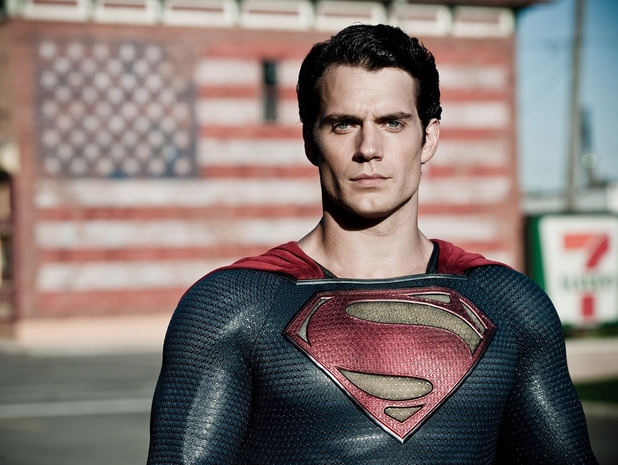
Henry Cavill in Man of Steel

Grade: B-


If you spent your days since The Dark Knight Rises weeping because Christopher Nolan’s genius might never be found in another superhero again, fear not.

While Christopher Nolan only produces and co-writes Man of Steel, the latest superhero reboot, traces of his grittier hero formula are found…to a point.

The details in Clark Kent’s backstory make this reboot a bit more unique than others and more akin to the The Dark Knight series. Zack Snyder, director, explores Kent’s emotional and social struggles growing up so differently from the rest of us.

The film gives glimpses into Kent’s past, showing him trying save those around him without giving away his gifts, out of fear that he would not be accepted. By the time he’s a young adult, he struggles to find his place in the world that so desperately needs him but would also be wary of his gifts should he show them.

But despite his own fears and those of Mr. and Mrs. Kent, Clark can’t ignore his conscience.  

Before I get into what’s wrong, I have to say, Snyder does so much right in this version. First, exploring Superman’s character itself humanizes him — much like we saw of Bruce Wayne in The Dark Knight. The best scenes in the movie are the flashbacks to Kent’s younger years, as the biggest challenge he faces is himself.

Diane Lane and Kevin Costner give terrific performances as Mr. and Mrs. Kent, and Henry Cavill, who plays Superman, gives a soulful turn to both Kent’s vulnerable insecurity and Superman’s moral conviction in a way that balances both the human and super sides of him.

This film is also probably the most obvious about Superman as a Christ-like figure. He comes from another world, he saves humanity, accepts his role as savior at the age of 33. There are several shots in the movie when he falls or flies in the shape of a cross. There’s even a scene where Kent seeks a priest’s advice and Christ radiates through the stained-glass window behind him. Maybe it’s a bit too out there, but personally, I liked the reminder.

But, alas. Despite what’s going for it, we only see glimpses of an epic film with great potential depth until we are drowned in special effects and an overly-drawn out climax battling General Zod in New York City. I almost felt like all those poor buildings did. The film had such potential to revitalize our beloved hero but turns back to the same blockbuster formula of overdone CGI and a cliché climax — thankfully, it ends on a simpler note.

Amy Adams gives a feistier spin to reporter and love interest, Lois Lane, but as a pair, it doesn’t quite seem to work between her and Kent. There’s also very little development on any character other than Kents’s, even costing the film its romance.

As a whole, the movie is entertaining and is a more unique take on a hero, as opposed to, say … The Amazing Spider-Man. Here we actually have a reason to reboot and redefine Superman. And while the film has some great moments, it also loses some of its luster in the middle. Is it worthy of The Dark Knight reboot? No. But is it a good movie? Definitely. It’s certainly received the Nolan-esque “dark and gritty” facelift that most recent superhero movies seem to be applying.

Some critics aren’t gung-ho about the trend of making superhero stories darker. Gone are the “KA-POW!” days of our timeless heroes, but while I believe the darkness has a time and place, I also believe that the trend is a good thing.

 What the darkness does to the superheroes, in giving them some kind of inner conflict, a struggle to accept their responsibility or a struggle to choose the good, is a reflection of our own inner struggle.

We all have the capability for greatness — it’s getting there that’s the hard part. We all struggle with choosing good, with accepting who we are and doing the right thing sometimes. We all have a darkness within us and the battle between evil and good doesn’t just rage in fantasy stories. It happens in our own hearts, on a daily basis.

What the superheroes teach us through it, provided they show that they overcome those struggles and choose good, is there is always hope and always a chance to get up, even if we’ve screwed up.

Darkness isn’t a bad thing. Without it, we wouldn’t have light. But in dark stories, the light must always be shown, because there is the ineffable truth that hope and goodness always wins. And despite its weaknesses, Man of Steel shows this.


Wednesday, January 16, 2013

Review: 'Les Miserables'

Cosette (Amanda Seyfried) and Marius (Eddie Redmayne) in Les Miserables

Rating: A+


Do you hear the people sing? Singing the praises of Les Mis!

Seriously, I can't stop singing.

This soundtrack will be stuck in your head forever — and most people I know are okay with that.

I walked into the movie theatre with little to no knowledge of the beloved musical, Les Miserables. But I walked out of the theatre a changed person. 

I still struggle to find words to describe just how epic and moving the story is. The fact that the film is flawless just increases its potency. 

Its quality is nearly perfect, so I won't spend much time talking about it. The casting was perfect — I was so impressed by the singing abilities of the actors, not to mention their raw and deeply moving performances. The cinematography is larger-than-life but still very realistic. The costumes and makeup were flawless, and the score? No words. That's all I have say about that.

But I do want to draw on the moral themes in the story, which is why it has transcended time and become a classic.

Les Mis is about the human experience. Sin and virtue. Love and hate, justice and mercy, forgiveness and redemption...but ultimately, it's a story of love, with many as many layers as there are characters. It glorifies the greatest love — sacrifice. I find that the stories that strike my soul the most are the ones about real loving, about doing the right thing, even when it’s hard. Let me explain.

This love story is told through the ex-convict Jean Valjan (who I think is similar to St. Peter!) Valjan, after stealing from a bishop who helped him, encounters shame in his misery and sin. Something we can all relate to. He becomes a hero to us, though, because he chooses to hope. He realizes when the bishop tells him, "You must use the silver to become an honest man...I have saved your soul for God," that he is capable of greatness. And he accepts that call at any cost.

His story hits home because we are all the miserables. We all encounter, at some point, our sin, our misery, our weakness. We have two choices when we face misery: we can let it transform our lives so we live to love others, or we can wallow in the despair and let it destroy us, as Inspector Javer did when faced with the same choice as Valjan. (Much like Judas!) 

Fantine (Anne Hathaway) and Jean Valjan (Hugh Jackman)
One of the greatest strengths of Les Miserables is that it doesn't hide the gritty grime. It doesn’t hide the struggle or sin, because sin is a reality we all must face. But it doesn’t let you rest there — we are reminded through each character that although we are miserable, there is always hope of redemption and that we are created for greatness. We will become great if we let love change us.

Are we up for that challenge? Because letting love transform us calls us on mission to love in return. While I watched the film, I was hit by depiction of poverty in the story, set in the slums of France. It was a sobering reminder of how often I pass the poor and homeless on the street without “looking down”. We, “the righteous hurry past, they don’t hear the little ones crying.”

Les Mis is a reminder, then, that man was made to love. We are called to forget ourselves and to notice the needs of those around us, to respond with generosity. Even forgiving those who we think should be avenged. We are called to be merciful. That's what makes Valjan a hero. And that's how we can become heroic, too. When we love, we encounter God within others. “To love another person is to see the face of God.”

Les Miserables is mind-blowing, to put it lightly. I'm not ashamed to say that I've seen it in theaters three times. And I wouldn't object to seeing it more, because I get something new out of it each time. 

Bottom line is, every soul should see this movie. If you haven't seen it already, GO. If you have, go again. Every once in a while, a golden movie comes along that is at once entertaining and inspiring. This is one of those movies. 

Monday, December 17, 2012

"The Hobbit: An Unexpected Journey" Review


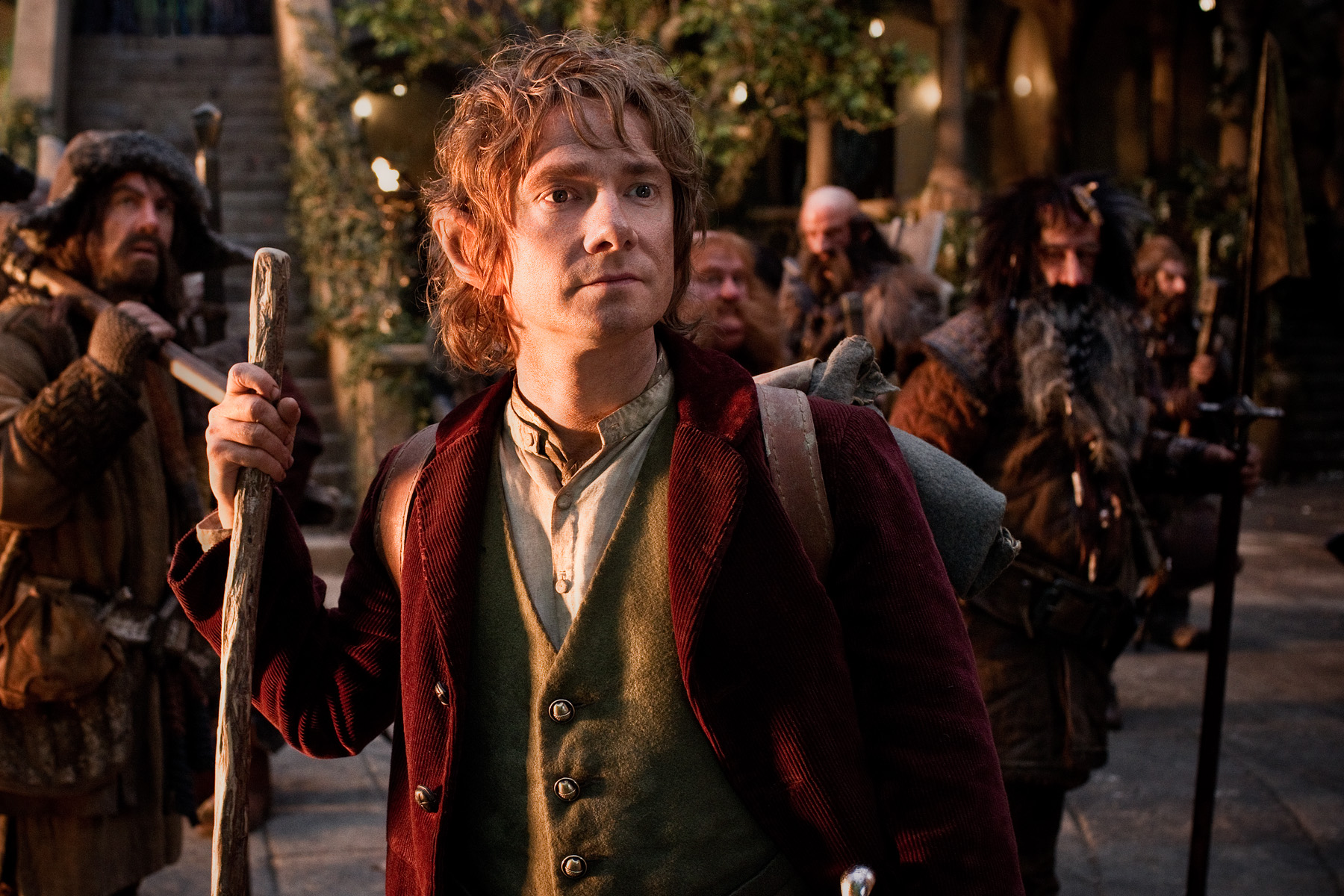
Martin Freeman as Bilbo Baggins

To put it simply, it feels like coming home.

The minute The Hobbit: An Unexpected Journey starts, a comfortable feeling settles as you find yourself back in the rolling hills of The Shire, greeting old faces from Peter Jackson’s beloved films released only nine years ago.

Right away there is a proper blend of old and new, from the familiarity of sets like The Shire and Rivendell to the new Dwarven kingdom of Erebor, where we meet a few new faces.

14 new faces to be exact. While several familiar faces return — including Ian McKellen, Cate Blanchett, Hugo Weaving, Andy Serkis, Ian Holm (old Bilbo) and Elijah Wood  — most screen time is taken by a a much younger Bilbo Baggins (Martin Freeman) and a company of rough-and-tumble dwarves led by Thorin Oakenshield (Richard Armitage), and to be honest, I couldn't get enough of them.

Martin Freeman as Bilbo is a perfect choice. Previously playing Dr. Watson on BBC's show Sherlock, Freeman gives his characters deeply relatable qualities and an awkward likability. Bilbo in a way, represents us. We love our comfort, our home, our food, and we like life to be predictable. Before Bilbo meets the dwarves and is thrown into their quest to reclaim their homeland, Bilbo wanted nothing unexpected. But he has another side, as do we; a side that has the ability to become a hero in ordinary, everyday choices and events. Freeman perfectly portrayed the simple, everyday man making small but important choices that aided his friends.

Richard Armitage as Thorin Oakenshield
Richard Armitage (aka the "New Aragorn") is a new crowd favorite. Although a surprisingly unknown actor, Armitage brings immense depth and battle-scarred bravado to a character that has lost his homeland and will stop at nothing to reclaim it. 


The story of The Hobbit takes place 60 years before Frodo’s quest to destroy the One Ring; Middle-Earth is a simpler, lighter place and the overwhelming sense of doom and gloom in Lord of the Rings is a shadow in slight beginnings. The story is told as a flashback by the old Bilbo to his nephew Frodo, the main hero in Lord of the Rings.   

While Tolkein’s book is only around 300 pages, Jackson is stretching the story into three movies to include background history from the appendices of Lord of the Rings and perhaps parts of The Simarillion. Needless to say, the film is a bit overlong, but you hardly notice. It's a fast-paced adventure from start to finish, an "out of the frying pan and into the fire" feeling that fits the book's pace.

While Lord of the Rings had a flawless, classic feel visually, The Hobbit upgrades its technology, giving it a more animated feel. Like it or not, it's a fitting tone since it's a lighter story than Lord of the Rings. And like Lord of the Rings, The Hobbit still has plenty of intensely awesome battle scenes — a kind of OHMYGOSHTHATWASSOCOOL!!! kind of intensely awesome. (Definitely thought that in my head as I watched...don't care). 

Overall, The Hobbit is less compelling than Lord of the Rings, but that's mostly because we're dealing with an evil dragon and reclaiming the dwarves' lost land, as opposed to destroying the Ring that will eventually end all of Middle-Earth.

Still, costumes, makeup, props, cinemetography done the way God intended it, a perfect cast and a flawless film score — it's the stuff that made Lord of the Rings so magical, and Jackson's definitely done it again. It's in those little magical moments of the film that it becomes great. As Gandalf puts it, it is “not in great but in the small moments of kindness and love, that keep the darkness at bay.” And I think Tolkein would be proud. 


Monday, July 23, 2012

Is 'The Dark Knight' to Blame?


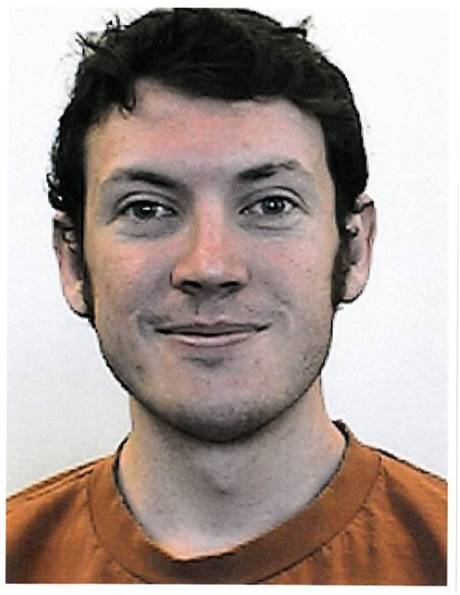
James Holmes, Colorado mass shooting killer

In the wake of the Colorado shooting that occurred during the midnight premiere of The Dark Knight Rises, it felt eerie to watch the same film, imagining myself in their shoes at the film’s start. Many have speculated that because the murderer, James Holmes, declared himself the Joker, The Dark Knight’s violence is to blame.

I won’t dare deny the fact that the film was physiologically disturbing. It ultimately killed Heath Ledger, who became his character so much that he too was left mentally disturbed. While that might have influenced Holmes, I don’t to lay the blame on that particular film.

I blame us, the audience, as well as the movie industry. Movies have become increasingly violent over the past few decades — as have shootings. Holmes might have copied Joker, but the Columbine killers dressed themselves in dark trench coats styled after The Matrix characters.

Because of the increased violence in films, I believe it predisposes those who might need nothing but a little nudge towards disorder, mentally, to be more violent and send them over the edge. While those of us who are more mentally stable might be able to handle violence in films, it still affects us. It still waters down the real gravity of violence. Because when that violence happens in real life, it’s tragedy —and we watch violence in movies as if it’s nothing.

The movie industry makes more violent films, it’s true. But we are the ones still going to the box office, showing them that we want to see it. I’m not saying don’t go see a movie if it’s violent. But I am suggesting we pay more attention to what we let ourselves be influenced by. Because it does influence us, whether we realize it or not. And it has real-life consequences.